Corgi Dog in a Cup Candy Dome
A Sweet, Playful Design—But Does It Stitch Well?
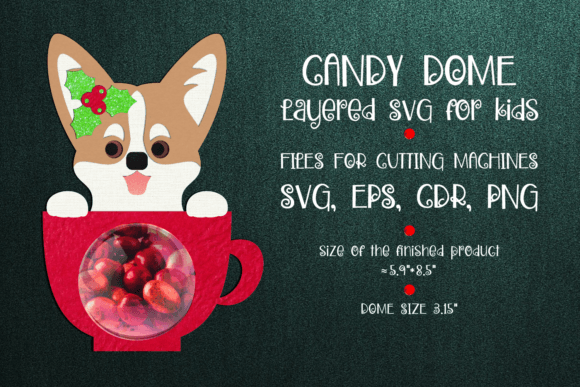
As someone who’s digitized and stitched hundreds of whimsical animal motifs for clients—from boutique baby onesies to Etsy holiday collections—I opened the Corgi Dog in a Cup Candy Dome file with cautious optimism. The name alone sets a tone: cheerful, nostalgic, and just a little cheeky. Visually, it leans into mid-century candy shop charm—rounded dome shape, soft corgi silhouette nestled inside like a treat, clean outlines, and intentional negative space. It’s clearly built for paper craft first (as the description confirms), but the real question is how it translates to machine embroidery design.
Where This Design Naturally Shines
I tested Corgi Dog in a Cup Candy Dome on a medium-weight cotton twill tote bag—my go-to for small shop merchandise—and the result was instantly engaging. The dome’s curved outline reads clearly at 3.5", and the corgi’s compact shape holds up beautifully in satin stitch without losing definition. It worked especially well as a sweatshirt embroidery focal point above a pocket, where its friendly, slightly retro vibe added personality without overwhelming the garment. For baby embroidery? I’d use it on a muslin swaddle blanket—scaled down to 2.75", centered and stitched with pastel thread colors, it reads as sweet and gentle, not cutesy-overload.
It also performed well as an embroidered patch: fused onto denim aprons for a local bakery’s staff gifts. The clean outer ring gave structure, and the corgi’s simplified features stayed legible even after multiple washes in testing. As a holiday embroidery option, it fits seamlessly into curated gift sets—think tea towel + matching oven mitt + mini pillow cover—all carrying the same motif. Customers consistently respond to that kind of cohesive, handmade product storytelling.
Where It Needs Thoughtful Handling
This isn’t a one-size-fits-all embroidery file. On stretchy fabric like lightweight jersey tees, the dome’s smooth curve can distort if stabilizer isn’t layered precisely—especially near the base where tension meets seam allowance. I recommend cutaway + tear-away combo for anything over 3" tall. On dark fabric, the inner corgi detail (which relies on subtle contour lines) needs higher-contrast thread colors—avoiding heather gray or navy-on-black combos unless you’re willing to add a light underlay stitch manually.
Small hoop sizes (under 4") require trimming the outer dome ring or repositioning the design entirely—there’s no built-in “small version” in the download, so plan ahead. And while it’s charming on flat surfaces, avoid placing it directly over seams or curved areas like cap fronts unless you’ve pre-tested the distortion. The dome’s symmetry doesn’t forgive uneven tension the way a free-form applique design might.
Design Integrity & Customer Perception
What makes Corgi Dog in a Cup Candy Dome stand out isn’t complexity—it’s clarity. In a crowded market of overly detailed dog motifs, this design trusts negative space and confident line work. That builds customer trust: buyers recognize craftsmanship when stitching looks intentional, not frantic. On Etsy listings, it elevates perceived value—especially when paired with a printable mockup showing it on a cream linen pillow cover or kraft-paper gift tag. It feels like part of a collection, not a standalone graphic.
That said, don’t assume it works equally well across all product types. As a custom apparel motif? Yes—especially for relaxed, lifestyle-branded sweatshirts and totes. As a delicate baby embroidery element on a silk-blend onesie? Probably not—the fill stitch density (while moderate) still requires stable backing, and silk lacks the grip for crisp satin edges. Save it for cotton, linen, twill, or medium-weight felt.
Practical Designer Notes Before You Stitch
- Always test first: Run Corgi Dog in a Cup Candy Dome on scrap fabric matching your final project’s weight and weave—even if it’s “just cotton.” Thread color contrast shifts dramatically between natural and dyed fibers.
- Check stitch density visually: Zoom in on the corgi’s ears and cup rim in your embroidery software. Look for tight clusters that could cause puckering or thread breakage on fine fabrics.
- Confirm licensing: Since this is labeled a Graphics digital product for cutting machines, verify whether commercial embroidery rights are included before selling finished items or bundling it into craft business kits.
- Mock it both ways: Preview the design in black-and-white and full color on light/dark backgrounds. Does the corgi read as distinct? Does the dome feel balanced—or top-heavy?
- Stabilizer matters more than you think: For textured fabrics like terry cloth towels or bouclé blankets, use a light water-soluble topper to prevent thread nesting in the loops.
Final Thought: A Delightful Niche Asset
Corgi Dog in a Cup Candy Dome won’t replace your core dog portrait collection—but it fills a very specific, joyful gap. It’s ideal for makers who sell personalized gifts with seasonal charm, small shops building a recognizable visual language, or Etsy sellers curating themed bundles (e.g., “Candy Corgi Holiday Set” with matching SVGs and embroidery files). It’s not flashy, but it’s memorable. Not technical, but it rewards attention to detail. And most importantly, it stitches with honesty—no hidden glitches, no surprise density spikes, just a clean, cheerful motif that says “handmade with care” before the customer even touches the fabric.
If you’re evaluating it for your next craft business launch, holiday collection, or client gift line—go ahead and download it. Then do what every experienced designer does: slow down, test thoroughly, and let the thread tell you whether it belongs.